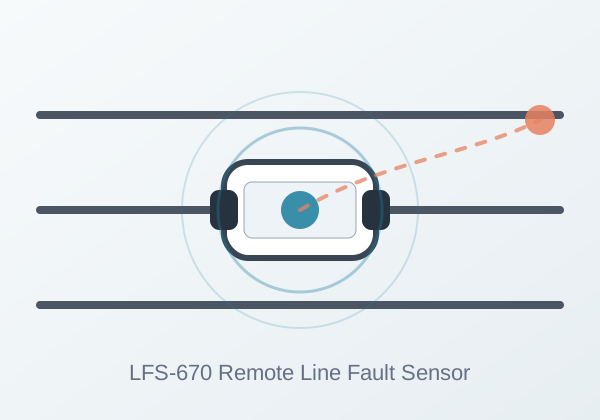
Description
Remote line fault sensor for feeder monitoring and outage response
The LFS-670 is a smart line fault sensor designed for utilities that need remote indication from long overhead feeders. It detects fault passage locally and transmits event data to a control center or SCADA gateway.
In addition to fault alarms, the sensor can report load-current trends and voltage presence. This helps operators confirm whether a feeder section is energized after switching or restoration work.
Typical applications
- Remote line fault indication for rural and hard-to-access feeders
- Configurable reporting interval to balance visibility and battery life
- Event logs for outage analysis and crew dispatch
- Distribution automation and feeder monitoring projects
Engineering note: Trip thresholds, reset logic, communication architecture, insulation coordination, EMC performance and installation method must be validated against the target feeder, grounding method, protection settings and applicable utility standards before final specification.
Reviews
There are no reviews yet.